Top Food Packaging Manufacturers in China for Global Buyers
For global buyers, choosing a food packaging manufacturer in China involves more than comparing prices or browsing product photos. Buyers need to assess material specifications, production consistency, print quality, communication, and the supplier’s ability to provide clear documentation. Small details matter: a pouch seal, carton edge, or label color can affect how a product performs on a busy packing line.
The wider challenge is significant. UNEP’s Food Waste Index Report 2024 estimates that 1.05 billion tonnes of food were wasted in 2022, equal to about 19% of food available to consumers. FAO’s 2023 reporting estimated that 13.2% of food was lost between harvest and retail in 2021. These figures do not mean packaging alone can prevent food loss or waste. They do show why fit-for-purpose packaging deserves careful evaluation, alongside storage, transport, and handling.
This guide introduces leading Chinese manufacturers and practical points for comparing them. Look beyond catalogue claims. Request samples, review specifications, and ask how the factory checks dimensions, seals, and print consistency. A polished catalogue is not proof. Supplier capabilities can vary by facility, product type, and order requirements, so claims should be verified directly. The aim is not to name one universal winner, but to help global buyers identify manufacturers that match their product, quality expectations, and supply needs.
China’s Packaging Industry: RMB 1.15 Trillion in 2023 Revenue (CPF)
China’s packaging industry generated RMB 1.15 trillion in revenue in 2023, according to figures from the China Packaging Federation (CPF). This scale matters to global food buyers: it supports a broad supplier base for cartons, flexible films, molded pulp, and rigid containers. But the figure covers the wider packaging industry, not food packaging alone. The distinction is important. Buyers should verify a factory’s actual product range, production capacity, and quality records rather than treating national revenue as proof of supplier capability.
Demand is also shaped by changing retail patterns. China’s National Bureau of Statistics reported that online retail sales of physical goods reached RMB 13.02 trillion in 2023, up 8.4% year on year; food sales online rose 11.2%. More parcels mean practical packaging questions: Will seals hold after a long delivery? Can the pack resist grease and moisture? Ask manufacturers for test results, material specifications, and batch traceability.
Details matter. A glossy sample can look convincing, yet perform poorly on a humid warehouse shelf. I would compare samples under the intended filling and transport conditions, not just under showroom lights. The headline figure is impressive, but it cannot replace careful supplier checks.
Food-Packaging Formats: Flexible Films, Plastics, Paper, Metal, and Glass
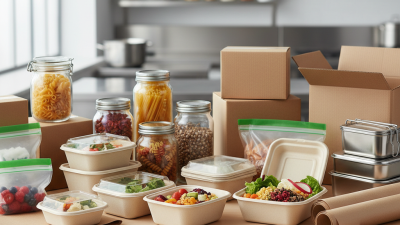
Food packaging format should match the food, filling process, and shipping route. Flexible films are lightweight and can wrap snacks or seal pouches around dry goods. Their barrier layers help manage moisture and oxygen, but the package still needs suitable seals. A crushed corner can become a real problem.
Rigid plastics suit tubs, bottles, and trays that need shape during handling. Buyers should compare clarity, stiffness, closure fit, and performance at the intended filling temperature. Paper-based packs offer a tactile, printable surface and can work well for cartons or dry foods. However, paper alone may not resist grease or moisture; coatings and liners change its disposal profile.
Metal cans and containers provide strong protection and tolerate rough transit, though their weight and opening style may affect costs and customer use. Glass is chemically stable and lets shoppers see the product, but it is heavy and breakable. No format wins every time. Request samples and test them with the actual product, filling equipment, and transport conditions. Check food-contact documentation and destination-market requirements before approving specifications. Even careful testing can miss a small sealing issue, so review production samples too.
Leading Chinese Manufacturers by Material, Product Type, and Export Reach
Chinese food-packaging suppliers are best compared by material, product type, and export capability—not factory size alone. Flexible-film producers make rollstock and pouches for snacks, frozen foods, and sauces; paperboard specialists supply cartons and sleeves; rigid-packaging plants produce trays, cups, and tubs. Ask for barrier data, seal-strength results, and samples tested with your actual filling line. A glossy sample proves little.
Product fit matters because packaging must protect food through storage and transit. FAO’s 2023 assessment of the Food Loss Index estimated that 13.2% of food was lost globally between harvest and retail in 2021. That figure is not a packaging-only measure, but it highlights why moisture, oxygen, and damage control deserve attention. For export reach, check the supplier’s experience with your destination, shipping records, carton markings, and ability to provide consistent specifications. I would not treat a claimed export footprint as proof; request verifiable references and a trial order.
Tips: Match material to shelf life, temperature, and filling method. Confirm samples under real production conditions. Ask for recent quality records and transit-test results. One weakness: supplier documents can look complete while leaving key test conditions unclear. Get those conditions in writing.
Top Food Packaging Manufacturers in China for Global Buyers — Leading Chinese Manufacturers by Material, Product Type, and Export Reach
Material benchmark: packaging recycling rates in the European Union, 2022 (rounded percentages).
Paper and cardboard had the highest recycling rate in this benchmark, followed by metals and glass. These figures provide material context for global sourcing; they do not rank Chinese manufacturers or measure export reach. Source: Eurostat, Packaging waste statistics.
Supplier Comparison: Capacity, MOQ, Lead Time, and Quality Certifications
Global buyers should compare packaging suppliers by usable capacity, not advertised output. Ask how many lines handle your format and whether those lines run year-round. A factory producing 500,000 pouches daily may still struggle with a custom barrier structure. Request a recent production plan or anonymized order record. Numbers matter. A large figure alone proves little.
Minimum order quantity affects inventory risk. For printed flexible packaging, plate setup and material sourcing can push MOQs upward; stock containers may allow smaller trials. Ask whether the quoted MOQ applies per size, color, or design. Small runs cost more. Compare landed cost per usable unit, including setup charges and expected waste, rather than unit price alone.
Lead time should be split into artwork approval, sample production, mass production, and shipping handoff. Get each stage in writing, then ask what happens if incoming film fails inspection. For quality, review current certificates, expiry dates, site names, and product scope. ISO 22000 or BRCGS documentation can support a review, but neither replaces checks on food-contact materials and batch traceability. Ask for migration-test reports matching the intended material and use. Late sample approval commonly causes delays, while supplier estimates are not guarantees. Quoted capacity and delivery dates can also shift during peak season, so leave room for verification.
Food-Contact Compliance: China’s GB 4806, EU 1935/2004, and FDA 21 CFR
For global buyers, food-contact compliance is not one certificate that travels everywhere. China’s GB 4806 series sets general and material-specific requirements; EU Regulation 1935/2004 requires materials not to endanger health or alter food unacceptably. In the United States, FDA requirements in 21 CFR depend on the substance, its intended use, and conditions of use. A pouch holding oily snacks may need different migration evidence from a dry-food carton. Small details matter.
Ask Chinese manufacturers for the exact material structure, intended food type, temperature, and contact time behind each test report. Check whether reports cover inks, adhesives, coatings, and recycled content—not only the main film. The OECD’s Global Plastics Outlook (2022) estimates that packaging generated 40% of global plastic waste in 2019, underscoring the value of reviewing material choices alongside safety. Yet recycled content claims need careful scrutiny; a sustainability claim alone does not establish food-contact suitability. Reports can also become outdated when suppliers change. Easy to miss.
Compare the test conditions with your real supply chain, including hot filling, freezing, or long storage. Request traceability records and a written change-notification process. GB, EU, and FDA pathways differ, so a document accepted in one market may not satisfy another. Independent review is sensible, even when paperwork looks complete.