How to Choose Food Packaging for International Shipping?
International shipping turns food packaging into a demanding performance test. A carton may face humidity, vibration, temperature changes, long storage, and repeated handling. The right package must protect food quality from the factory to the customer’s kitchen.
Dr. Susan Selke, a respected packaging researcher and former director of Michigan State University’s School of Packaging, describes packaging as “a system, not a single material.” That idea matters here. A strong pouch cannot compensate for a weak carton. A sealed tray may still fail if condensation damages its label or outer case. Good decisions consider the food, package, route, climate, handling, and final delivery method together.
Start with the product’s real weaknesses. Does it absorb moisture? Does it break easily? Does it require temperature control? Choose materials that provide suitable barriers against oxygen, light, water vapor, and physical impact. Test seals, corners, closures, and pallet stability before committing to large production. Small failures become expensive overseas.
Think beyond the first shipment. Packaging should be practical for filling, stacking, inspection, storage, and disposal. Clear labeling and reliable traceability also support safer operations, although requirements vary by destination. Professional advice remains valuable.
No checklist is flawless. A package that works in a dry warehouse may struggle beside a humid port. That assumption can fail. Pilot shipments, real transit data, and honest review often reveal more than a perfect specification sheet. This guide explores the key choices, trade-offs, and practical tests behind dependable food packaging for international shipping.
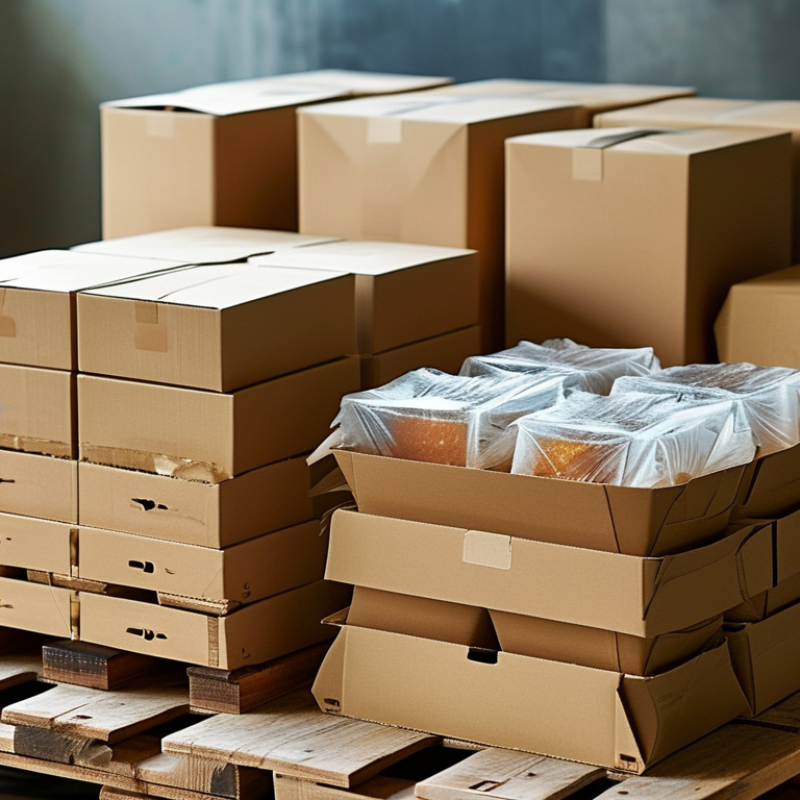
Before choosing packaging, define the food product precisely. Is it dry, chilled, frozen, liquid, oily, acidic, or ready to eat? Record its pH, water activity, fat content, allergens, texture, and expected shelf life. A biscuit needs moisture protection, while fresh seafood needs continuous temperature control.
International shipping adds pressure. Map the route, transit time, seasonal temperatures, humidity, vibration, and customs delays. The World Health Organization estimates that contaminated food causes about 600 million illnesses annually. This makes seal integrity and contamination control practical priorities, not paperwork. The FAO’s State of Food and Agriculture 2019 report estimates that 14% of food is lost between harvest and retail. Poor packaging can worsen that loss.
Use the product’s failure risks to set packaging requirements. Test compression, leakage, puncture resistance, oxygen transfer, and temperature performance. Include a realistic delay test. Two extra days can change everything. Food-contact materials must meet the destination market’s requirements, and labels should identify ingredients, allergens, lot information, and storage conditions. A common mistake is selecting packaging from normal warehouse conditions. That assumption may fail inside a hot container or an airport holding area. Define measurable limits, then validate them with trial shipments and temperature loggers.
Define the food product and international shipping requirements first. Temperature control is a key packaging decision because different food categories require different transport conditions. The chart shows representative target temperatures commonly used for international food logistics.
Use insulated packaging and temperature-monitoring devices for chilled or frozen products, moisture-resistant materials for fresh produce, and barrier packaging for ambient shelf-stable foods. Before selecting the final pack, confirm the product’s required temperature range, expected transit time, customs delays, humidity exposure, shock risk, and destination-country food regulations.
Food packaging must satisfy the destination country’s food safety standards. A strong-looking carton is not enough. The inner pouch, coating, adhesive, ink, and seal may contact food directly or indirectly. Check whether each material is approved for the specific food type. Fatty, acidic, and dry foods can require different testing.
I use a compliance checklist before approving a shipment. It includes food-contact declarations, migration test reports, allergen information, and production-batch records. Ask the supplier for documents, not general promises. Also verify the importer’s labeling rules, permitted additives, language requirements, net weight, origin, and expiration format. These details often differ between markets. Confirm the current rules through official customs and food-safety authorities. Regulations can change.
Packaging must also survive the journey. Test sealed samples under heat, cold, humidity, vibration, and stacking pressure. A weak seal may fail after several days inside a damp container. Use clean, food-grade materials and keep packaging away from chemicals during storage. Tamper-evident features can support consumer safety, but they do not replace legal compliance.
I once underestimated label space. The required information made the original design impractical. That mistake changed my review process. I now check the destination market before selecting package dimensions. However, one checklist cannot cover every shipment. Local inspection practices and product classifications may still create uncertainty. Keep records, request written clarification, and revise the packaging when evidence exposes a weakness.
Food packaging for international shipping must protect the product before it protects its appearance. FAO’s State of Food and Agriculture 2019 reported that 13.2% of food is lost between harvest and retail. Packaging cannot solve every cause, but suitable materials can reduce crushing, moisture damage, and temperature abuse.
Start with a rigid outer carton made from strong, moisture-resistant corrugated board. Select its compression strength according to product weight, stacking height, and route conditions. Inside, use a food-grade liner when oils, sauces, or condensation may contact the carton. A sealed barrier film can limit oxygen and moisture transfer for dry products. For chilled goods, combine insulated panels with refrigerant packs and a small temperature indicator. Keep the product stable.
Protective layers need careful spacing. Molded fiber, paper cushioning, or air cells can absorb movement around jars and trays. Fragile food needs corner protection, not only extra filler. For frozen shipments, avoid gaps that allow warm air to circulate. For long routes, test packaging through vibration, compression, and temperature cycles. International Safe Transit Association protocols offer useful testing guidance.
A heavier package is not always safer. It may increase freight emissions and handling damage. The UNEP Food Waste Index Report 2024 estimated 1.05 billion tonnes of food waste in 2022, so prevention matters. Still, I would question any design based only on laboratory results. Humidity, rough transfers, and delayed delivery can expose weak assumptions. Trial shipments often reveal what calculations miss.
| Packaging Material or Layer | Primary Function | Barrier Performance | Protection During Transport | Typical Food Applications | International Shipping Considerations | Sustainability Notes |
|---|---|---|---|---|---|---|
| Corrugated Fiberboard Outer Box | Provides the main structural protection and supports stacking. | Low moisture and gas barrier unless coated or combined with an inner pack. | High for compression Good resistance to ordinary handling and stacking when correctly sized and graded. |
Cartons of dry foods, canned goods, jars, pouches, and secondary food packs. | Choose a box with suitable edge-crush and burst strength. Use a snug fit to reduce movement and dimensional weight. | Widely recyclable where clean and dry. Paper fibers lose quality when heavily contaminated with food or moisture. |
| Molded Paper Pulp Inserts | Separates products and absorbs impact inside the shipping carton. | Limited barrier protection; vulnerable to prolonged moisture exposure. | Medium to high for cushioning Useful for bottles, jars, and other rigid containers. |
Glass jars, bottles, trays, and gift packs containing fragile food products. | Must be combined with a moisture-resistant inner package when condensation or wet conditions are possible. | Generally paper-based and recyclable or compostable depending on coatings, adhesives, and local facilities. |
| Expanded Polyethylene Foam | Cushions products against shock, vibration, and abrasion. | Low to moderate moisture resistance; not a substitute for a food-contact barrier. | High for impact cushioning Lightweight and resilient for fragile containers. |
Glass bottles, tins, rigid trays, and temperature-sensitive packs requiring added cushioning. | Useful when breakage risk is high, but additional volume may increase freight charges. | Usually recyclable only through specific collection systems; check destination-country requirements. |
| Air-Cushion Film | Fills voids and cushions products against movement and light impact. | Low barrier performance; punctures can reduce protective effectiveness. | Medium for cushioning Best for lightweight products and controlled void fill. |
Snack cartons, pouches, lightweight containers, and mixed-product shipments. | Use sufficient layers and test after compression, vibration, and drop exposure. Avoid placing it directly against hot products. | Often made from plastic film and may require separate film-recycling collection. |
| Polyethylene Inner Liner | Reduces exposure to external moisture, dust, and handling contamination. | Good moisture barrier Not a strong oxygen or aroma barrier unless specially engineered. |
Low for impact protection Requires an outer carton or rigid container. |
Flour, grains, powdered ingredients, dried fruit, and bulk dry foods. | Seal securely and confirm that the liner is suitable for direct food contact and the intended temperature range. | Plastic liners can improve product protection but may reduce overall recyclability when permanently bonded to paperboard. |
| Multilayer Barrier Pouch | Protects food from oxygen, moisture, light, and aroma transfer. | High, depending on structure Barrier performance varies with the combination of polymers, foil, coatings, and seals. |
Low to medium Needs a carton or cushioning layer to prevent punctures and crushing. |
Coffee, snacks, powdered foods, dried foods, sauces, and shelf-stable products. | Verify seal integrity, oxygen transmission, water-vapor transmission, and compatibility with customs and destination regulations. | Some structures are difficult to recycle because they combine multiple materials; mono-material options may improve recyclability when suitable. |
| Aluminum Foil Laminate | Provides strong protection from light, oxygen, moisture, and aroma migration. | Very high barrier Particularly useful for sensitive, oxygen- or light-reactive foods. |
Low to medium Can crease or puncture without an outer protective layer. |
Retort foods, coffee, dehydrated meals, nutritional powders, and high-value dry foods. | Protect from sharp edges and folding damage. Confirm sealing performance after filling and transport simulation. | Recycling is limited when foil is laminated to plastic or paper. Use only when the barrier benefit justifies the material complexity. |
| Vacuum Skin or Vacuum Bag | Removes excess air and helps limit oxidation and package movement. | Good oxygen reduction Actual performance depends on film structure, seal quality, and residual oxygen. |
Medium Reduces movement but does not replace cushioning for fragile products. |
Processed meats, hard cheeses, seafood, and selected chilled or frozen foods. | Use with validated refrigeration or freezing controls. Packaging cannot compensate for an unsuitable cold-chain temperature. | Usually uses plastic film; lightweight design can reduce material use, but end-of-life recycling may be limited. |
| Insulated Box with Gel Packs | Slows temperature change during transit for chilled products. | Insulation reduces heat transfer; it does not create cooling by itself. | Medium Provides some structure, but products may still require separate cushioning. |
Chilled foods, confectionery vulnerable to melting, fresh products, and temperature-sensitive items. | Specify target temperature, maximum transit duration, pack-out temperature, and seasonal shipping conditions. Confirm import requirements for refrigerants. | Use reusable insulation and correctly sized refrigerant packs where practical. Dispose of gel packs according to local instructions. |
| Desiccant Sachet | Controls residual moisture inside a sealed package or shipping unit. | Does not form a package barrier; absorbs moisture from the enclosed headspace. | None for impact Used as a supplementary protection layer. |
Dried foods, powdered products, seaweed, spices, and moisture-sensitive snacks. | Select a food-safe format, prevent direct product contact when required, and include clear handling instructions for children and consumers. | Small sachets add little material but require controlled disposal; never treat them as edible components. |
| Selection principle: match the packaging system to the food's moisture, oxygen, light, temperature, fragility, shelf-life, and regulatory requirements. Validate the complete pack through seal checks, compression testing, vibration testing, drop testing, and temperature or humidity trials representative of the intended shipping route. | ||||||
Temperature, moisture, and transit damage can change a product before it reaches the customer. Packaging decisions should begin with the product’s real shipping conditions, not attractive graphics. The FAO’s 2019 State of Food and Agriculture estimated that 14% of food is lost between harvest and wholesale. Poor temperature control and handling contribute to that loss. Check the product’s safe temperature range, then select insulation, refrigerants, or ventilation accordingly. A chilled product may need insulated liners and temperature indicators. A dry product may need moisture barriers and desiccants.
Moisture often enters through condensation, not rain. For example, a carton may leave a cold warehouse and enter humid air. The inner surface can become wet within hours. Use sealed inner packaging, water-resistant cartons, and spacing around the product. The package should also survive compression, vibration, and drops. The International Safe Transit Association’s 3A testing approach can help simulate parcel delivery conditions. Do not rely on one laboratory test. Real routes are messier.
UNEP’s 2024 Food Waste Index reported 1.05 billion tonnes of food waste in 2022. Packaging cannot solve every cause, but it can reduce preventable damage. Run a small pilot shipment across hot, cold, and humid routes. Record temperature, carton deformation, leaks, and product texture. Some designs will fail. That evidence is more useful than assumptions.
How to Choose Food Packaging for International Shipping?
Test, Label, and Prepare the Package for Global Delivery
Food packaging must survive more than a warehouse shelf. It may face vibration, drops, compression, humidity, and temperature changes. Start with a filled sample, not an empty carton. Test it empty. That mistake is common. Follow an ISTA distribution test protocol that matches the shipping route and parcel size. For sea freight, consider prolonged moisture exposure and container pressure. The UNCTAD Review of Maritime Transport 2023 reports that over 80% of global merchandise trade by volume moves by sea. This makes moisture resistance essential for many food shipments.
Use a sealed primary container, a protective secondary layer, and a strong outer box. Leave little movement inside. A small gap can become a crushed corner after thousands of kilometres. Check seals after vibration and drop testing. Record product weight, closure torque, carton dimensions, and failure points. Labels should show ingredients, allergens, net quantity, lot code, shelf life, storage conditions, and destination-language information where required. Requirements vary by market, so verify them with current customs and food authorities. Do not rely on an old template. The World Bank’s Logistics Performance Index 2023 highlights tracking and shipment reliability as major logistics factors. Add readable barcodes and a clear lot code. Test the scan. Labels are operational tools. During preparation, photograph each packing stage and keep test records. Real shipments can expose weak assumptions. Recheck them.