Choosing a tape machine for boxes is not simply a matter of buying the fastest model. In a busy packing area, the right machine must match box sizes, tape width, sealing volume, and operator habits. A narrow carton may pass smoothly, while a tall box can wobble or jam. Small details matter.
Practical experience shows that throughput figures need careful interpretation. A machine rated for 20 cartons per minute may achieve less with irregular boxes, weak corrugated board, or frequent size changes. Check the adjustment range, drive belts, rollers, and blade access before comparing prices. The sealing pattern should remain firm, straight, and clean, even when cartons carry moderate weight. Tape adhesion also depends on board dust, storage humidity, and surface quality.
Reliable selection combines supplier documentation with a short production trial. Ask for sample runs using your actual cartons and tape. Measure noise, changeover time, seal consistency, and rejected boxes. Confirm electrical requirements, guarding, emergency-stop features, maintenance support, and available spare parts. These checks reflect established packaging practice and reduce avoidable downtime. Test it.
Still, no machine is perfect. I would not choose solely from a brochure, because marketing claims can hide awkward adjustments or costly consumables. A careful comparison should leave room for improvement after installation. The best tape machine for boxes is the one that performs consistently in your real workflow, not merely in a showroom demonstration.
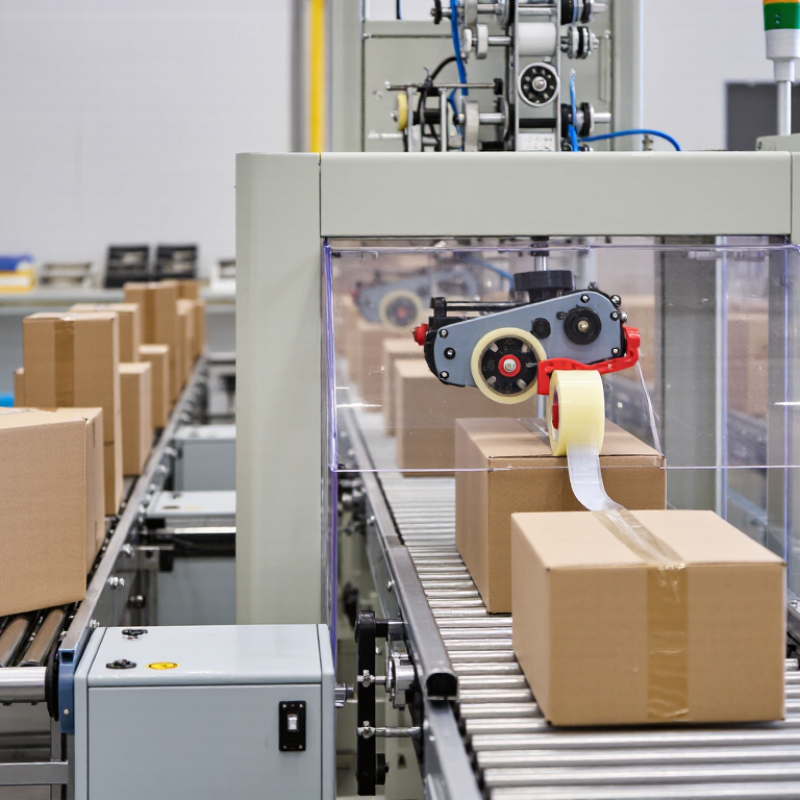
Before choosing a tape machine, define the actual box taping requirements. Measure the smallest and largest cartons in your production range. Record their length, width, height, weight, and board quality. A machine that handles one carton perfectly may struggle with soft, uneven boxes. Check the required tape width, tape material, and sealing strength. These details affect machine compatibility and operating cost.
Production conditions matter just as much. Confirm the target cartons per minute, conveyor height, available floor space, and power supply. Consider whether boxes arrive continuously or with gaps between them. Dust, humidity, temperature, and limited maintenance time can also affect performance. In practical evaluations, operators often focus on speed first. That can be a mistake. Stable feeding and easy adjustment may deliver better results than maximum speed.
Tips: Test real cartons before purchase. Include damaged edges and different box sizes. Watch for tape wrinkles, loose flaps, and jams. Ask operators to adjust the machine during the test. Their feedback is valuable. Keep spare rollers and cutting parts available. A simple maintenance plan improves reliability, although it may not prevent every unexpected stoppage. Allow extra space around the machine for cleaning and safe access. Document the test results, even when the machine seems suitable. Small details are easy to forget later.
How to Choose a Tape Machine for Boxes?
Choosing a tape machine starts with the box, not the machine. Measure length, width, height, and daily output. Small cartons often suit compact semi-automatic equipment. Operators fold flaps, then guide each carton through the sealing head. This setup works well for changing sizes. It also leaves room for human judgment. For steady runs, automatic machines can seal cartons at higher speed. They need consistent dimensions and accurate flap folding. A narrow size range usually improves performance.
For corrugated boxes, pressure-sensitive tape works best when surfaces are clean and dry. Standard carton sealing machines apply tape to top and bottom seams. Heavy or recycled board may need stronger pressure and wider tape. Test adhesion after storage, not only immediately. Cold rooms and dusty packing areas can change results. Small boxes may need gentle belts, while large boxes need longer support and stronger drive motors. Oversized cartons can twist during sealing. That detail is easy to miss.
Hot-melt or water-activated tape machines suit operations seeking different seal strength and packaging behavior. Water-activated tape bonds well with porous corrugated surfaces, but it needs correct moisture and timing. Hot-melt systems suit fast, repetitive packing, though heat settings require care. I would check adjustment range, guarding, cleaning access, and spare-part availability before purchase. Ask for trials using your actual cartons. One test is rarely enough. My own preference has changed after seeing machines struggle with warped boxes. A flexible machine may be slower, yet more reliable across seasonal materials.
| Tape Machine Type | Recommended Box Size Range | Suitable Box Materials | Typical Tape Width | Typical Throughput | Box Adjustment Method | Best-Fit Applications | Main Advantages | Key Limitations |
|---|---|---|---|---|---|---|---|---|
| Handheld Tape Dispenser | Small to very large cartons; no fixed machine opening | Single-wall and double-wall corrugated board; light-duty cartons | 48–75 mm pressure-sensitive tape | Approximately 5–15 cartons per minute, depending on the operator | Manual; the operator positions and closes the flaps | Low-volume packing, irregular cartons, occasional shipments | Low purchase cost, portable, flexible, and easy to use with different box sizes | Labor-intensive; inconsistent tape placement; not ideal for continuous production |
| Semi-Automatic Uniform-Size Sealer | Usually approximately 150–500 mm box width and 100–500 mm box height | Regular-slotted cartons made from single-wall or medium-strength corrugated board | 48 or 50 mm pressure-sensitive tape | Approximately 15–25 cartons per minute | Manual width and height adjustment; the operator feeds each carton | Small production runs with relatively consistent carton dimensions | Higher consistency than hand sealing; modest footprint; lower cost than fully automatic equipment | Frequent size changes reduce productivity; the operator usually folds the flaps before sealing |
| Semi-Automatic Random-Size Sealer | Commonly approximately 150–650 mm box width and 100–650 mm box height | Regular-slotted cartons with moderate variation in size; single-wall and selected double-wall board | 48 or 50 mm pressure-sensitive tape | Approximately 10–20 cartons per minute | Automatic sensing with powered side belts; manual carton loading and flap preparation | Warehouses handling multiple carton sizes in low-to-medium volumes | Reduces manual adjustment; accommodates mixed carton sizes; improves tape alignment | Slower than dedicated fixed-size machines; very small, very tall, or weak cartons may require testing |
| Automatic Uniform-Size Sealer | Usually approximately 150–500 mm box width and 100–500 mm box height | Consistent regular-slotted corrugated cartons; single-wall and double-wall grades within machine limits | 48 or 50 mm pressure-sensitive tape | Approximately 20–35 cartons per minute | Powered top and side belts; initial manual setup for a defined carton size | High-volume lines with one or a few standardized carton sizes | Fast, repeatable sealing; reduced operator effort; reliable top-and-bottom tape application | Less flexible for frequent size changes; requires correctly formed flaps and stable carton geometry |
| Automatic Random-Size Sealer | Often approximately 150–650 mm box width and 100–650 mm box height, subject to the machine design | Mixed regular-slotted corrugated cartons with reasonably square corners and stable board quality | 48 or 50 mm pressure-sensitive tape | Approximately 15–30 cartons per minute | Automatic height and width sensing; powered top and side belts | E-commerce fulfillment, distribution centers, and mixed-SKU packing lines | Handles changing carton dimensions with little operator adjustment; supports continuous workflows | Higher capital cost; oversized, undersized, damaged, or flexible cartons may not run reliably |
| Hot-Melt Adhesive Case Sealer | Typically medium to large cartons; exact range depends on the applicator and conveyor design | Corrugated cartons where strong bonding is needed; performs well on some recycled or dusty board when properly configured | Hot-melt adhesive bead rather than pressure-sensitive tape | Approximately 15–35 cartons per minute | Manual or automatic adjustment, depending on the line configuration | Heavy-duty packaging, cold-chain distribution, and cartons requiring high bond strength | Strong initial bond; can seal some challenging board surfaces; no tape roll replacement | Requires heated equipment and adhesive controls; higher maintenance and burn-safety requirements |
| Water-Activated Tape Sealer | Small to large cartons, provided the carton is compatible with gummed tape | Corrugated fiberboard with a porous, clean surface; especially suitable for paper-based packaging | Approximately 50–100 mm water-activated paper tape | Approximately 8–20 cartons per minute, depending on the dispenser and operator | Manual or semi-automatic; tape length and moisture are controlled by the dispenser | Tamper-evident shipping cartons, recycled-paper packaging, and premium paper-based packing | Strong fiber-to-fiber bond; tamper evidence; tape and carton can be recyclable together in many recycling systems | Requires clean, absorbent board and correct moisture; unsuitable for wet, waxed, or plastic-coated carton surfaces |
| Strapping and Tape Combination Machine | Medium to large cartons or grouped packages; dimensions depend on the frame opening | Heavy-duty corrugated cartons and loads requiring additional compression or bundle stability | Usually 48–75 mm tape plus polypropylene or polyester strap | Approximately 8–20 cartons per minute | Manual or automatic setup according to box dimensions and strap tension | Heavy, bulky, vibration-sensitive, or export shipments | Combines closure with load reinforcement; improves resistance to opening and shifting | Higher equipment and consumable cost; more complex operation; unnecessary for light-duty cartons |
Machine speed should match your real packing volume, not an impressive specification. A fast machine may process 30 boxes per minute, but frequent jams can reduce actual output. Measure your busiest hour and leave room for product changes. Box size also matters. A machine adjusted for one carton may struggle with shorter or lighter boxes. I once treated speed as the main buying factor. That was a costly assumption.
Tape compatibility directly affects reliability. Check the tape width, roll diameter, backing material, and adhesive type before testing a machine. Some tapes unwind smoothly, while others stretch, split, or leave residue on the cutting blade. Temperature and storage conditions also matter. Cold warehouses can weaken adhesion. Ask for a trial using your own cartons and tape. A short demonstration is not enough.
Tips: Run at least 100 boxes during testing. Inspect tape tension, overlap, cutting accuracy, and carton alignment. Press the sealed flaps by hand and look for lifting corners. Record jams and adjustment time, not only successful seals. Sealing quality should remain consistent from the first box to the last. Small defects are easy to overlook. They may still create serious handling problems later. Consider adjustable guides, accessible controls, and simple cleaning procedures. These details often matter more than maximum speed.
Choosing a tape machine for boxes starts with installation, not speed. Measure the conveyor height, carton range, floor space, and electrical supply before comparing models. PMMI’s 2024 State of the Industry report estimated U.S. packaging machinery shipments at $11.3 billion in 2023, showing strong investment in automated packaging. However, a larger machine is not automatically a better fit.
Leave clear access around the tape head, drive belts, sensors, and control panel. Technicians should remove guards only through a controlled maintenance procedure. Fixed guarding and emergency stopping devices should follow ISO 12100 principles and applicable OSHA requirements. The U.S. Bureau of Labor Statistics recorded about 2.6 million nonfatal private-industry injuries in 2023. Small access shortcuts still matter. Very much.
Check whether operators can see the tape path without reaching into moving parts. Confirm that the emergency stop is reachable from the loading and discharge sides. Maintenance doors should open without moving the machine or blocking nearby walkways. Ask for lubrication points, replacement intervals, spare-part access, and cleaning instructions. I once underestimated side clearance by a few centimeters; routine adjustments became awkward and slower. That mistake was avoidable. A practical trial with your largest and smallest cartons can reveal uneven sealing, jams, and awkward service positions before installation.
Estimate Total Costs, Operating Efficiency, and Future Expandability
A tape machine should be judged by total cost, not its purchase price. Record the machine cost, installation, tape use, maintenance, energy, and operator time. A low-cost unit may become expensive when adjustments take ten minutes per box size. Measure twice.
During a warehouse trial, track sealed boxes per hour and rejected cartons. Watch the operator’s movements closely. Small delays can accumulate across an eight-hour shift. Include changeover time, cleaning, blade replacement, and unexpected stoppages. These details often reveal more than a supplier’s performance estimate. I would also test several carton heights, because real orders rarely remain uniform. That assumption can quietly damage efficiency.
Future expansion deserves equal attention.
Check whether the machine can connect with conveyors, scanners, or additional packing stations. Confirm its adjustment range before choosing it for mixed carton sizes. Ask about spare parts, service training, and documented maintenance intervals. A reliable technical record supports better purchasing decisions. However, forecasts are imperfect. Your order volume may change, or a planned line may never arrive. Avoid paying for capacity that will sit unused. Choose a practical configuration with accessible upgrades, clear controls, and enough working space for safe adjustments. A simple spreadsheet can compare costs over three to five years, including downtime and labor changes.